How this guide was checked. Pumpkin condition, handling, maturity, and storage guidance was checked against University of Illinois Extension, Iowa State University Extension and Outreach, and University of Minnesota Extension on August 3, 2026. Styling recommendations are East End Seasonal editorial guidance; exterior longevity still varies with variety, temperature, moisture, handling, and carving.
Start with condition, not color
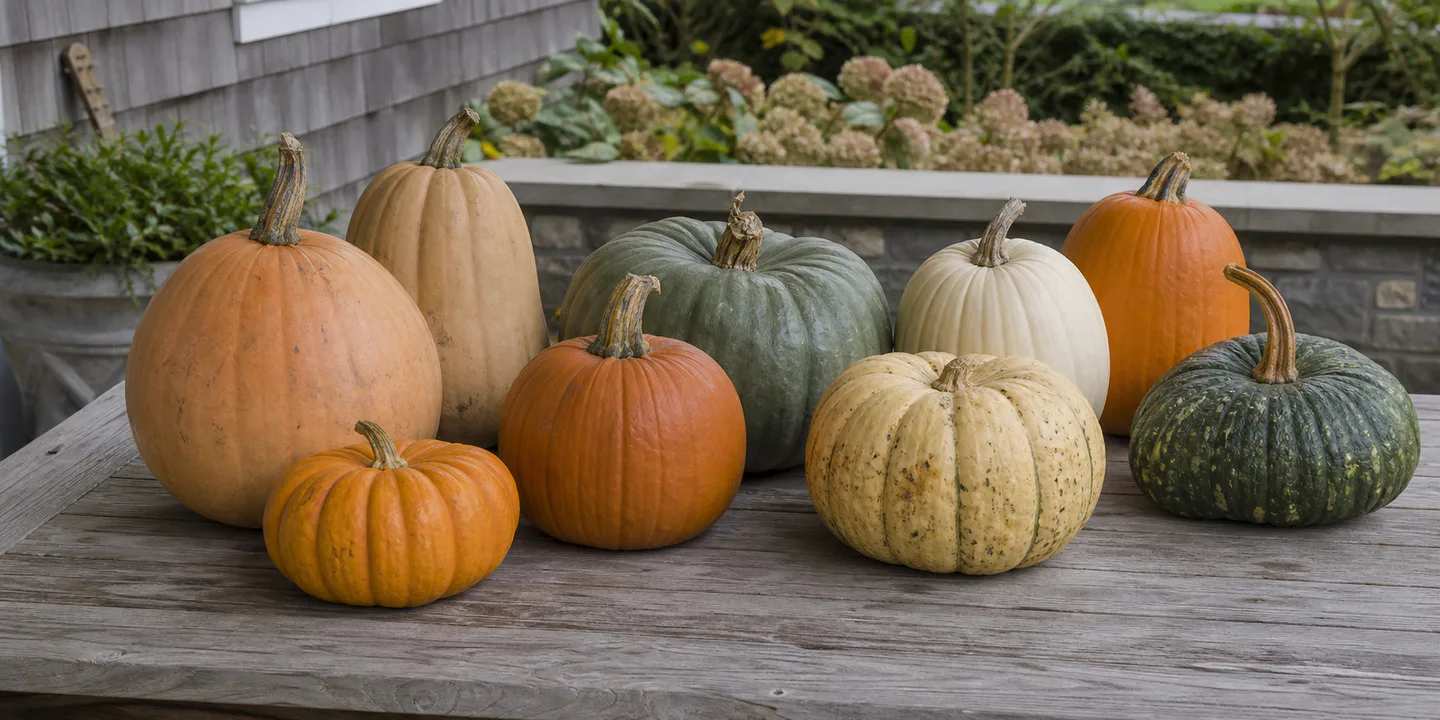
Choose a pumpkin that feels firm and substantial for its size. The rind should be hard rather than spongy, and the surface should be free of soft spots, open cuts, cracks, deep bruises, mold, or leaking areas. University of Illinois Extension and Iowa State University Extension both treat that surface inspection as the first quality check because damaged tissue is more likely to decay. Do not reject a sound pumpkin for harmless scarring, mottling, or an unusual silhouette: those natural variations can give a Fall display character. Color alone is not a universal test, either. Mature varieties can be orange, cream, green, tan, red, or a blend; condition matters more than whether every pumpkin matches the familiar jack-o’-lantern orange.
Match the shape to what the pumpkin needs to do
For carving, look for one broad, relatively smooth face that gives your design enough uninterrupted space. Set the pumpkin on a level surface and confirm that it does not rock; a flat or naturally stable base makes carving and display easier. A round pumpkin is not automatically better, and a tall or slightly lopsided one can produce a stronger silhouette. For uncarved exterior styling, think in roles: a few larger pumpkins create the visual anchors, medium pumpkins bridge the arrangement, and small pumpkins or gourds fill controlled gaps. Before buying a very large specimen, make sure it can be carried safely and will fit the intended step, planter edge, or landing without narrowing the walking route.
Treat the stem as a quality signal, not a handle
Look for a stem that is firmly attached, dry, and free from wet or soft tissue where it meets the fruit. An intact stem is useful visually and can reduce the open wound left when a stem breaks away. It is not a carrying handle. Support every pumpkin from underneath, especially when lifting it into a vehicle or moving it onto stone steps. Keep pumpkins from rolling into one another in transit; a fresh bruise or broken stem can undo a careful inspection. At home, check the bottom again before placement, since the surface that sat on the field or sales table is the easiest area to overlook.
Build a restrained palette, then vary the scale
A convincing Fall entrance usually needs less color variety than the farm stand offers. Choose a simple direction first: classic orange; pale cream and green; or a muted harvest blend of orange, tan, and sage. Within that palette, vary height, width, ribbing, and stem direction so the composition feels collected rather than manufactured. Repeat at least one color on both sides of the entrance to connect the arrangement, but avoid perfect symmetry. If the house already has strong brick, painted-door, planter, or foliage colors, let those materials guide the pumpkin palette. The best individual pumpkin is the one that has a clear role in the whole entrance—not merely the most unusual one in the field.
Place pumpkins where they can stay dry and out of the way
Intact pumpkins last best in cool, dry conditions with airflow. On an exterior entrance, favor shade when the architecture allows, avoid spots that remain wet after irrigation or rain, and do not pack pumpkins tightly against damp organic material. Inspect contact points and hidden bottoms periodically, particularly after warm or wet weather. Keep door swings, handrails, thresholds, and the usable width of steps clear; a small pumpkin that rolls underfoot is not worth the visual effect. If you plan to carve, leave the pumpkin intact until close to the date you need it. Once the rind is opened, the display becomes much more sensitive to heat, moisture, and decay.
Decide whether you want the sourcing trip or the finished entrance
Choosing pumpkins one by one can be the pleasure of the project. If the goal is a complete exterior entrance, the harder work is estimating quantity, coordinating scale, protecting the property during delivery, and styling the materials so they read well from the drive and the front door. East End Seasonal’s Fall packages start at $850 and include the listed pumpkins, gourds, seasonal plants, stalks, and bales for one confirmed exterior zone, with delivery and styled placement. Package scale and materials vary, and a preferred date is confirmed only after route, access, scope, and material availability are reviewed.
Selection sources
How the practical advice was checked
These references support the condition, handling, maturity, and storage guidance in this article.
Related planning guides & services